

AEO and GEO: The Future of Search Optimization
Aug 26, 2026
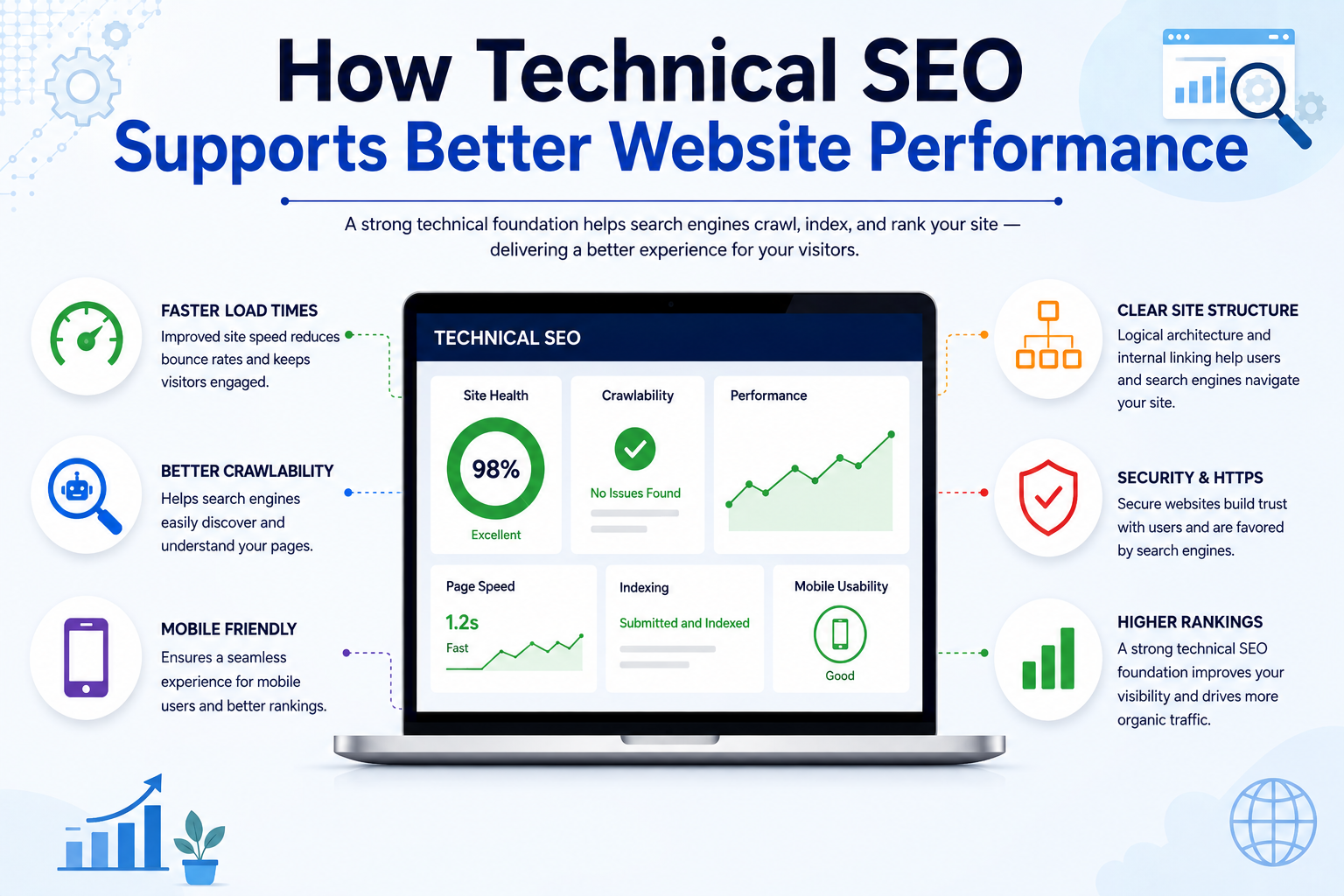
Your website needs more than attractive design and useful content to perform well in search results. It also needs a strong technical foundation that helps search engines discover, crawl, understand, and index your pages efficiently. This is where technical SEO becomes essential.
Technical SEO focuses on the behind-the-scenes elements that influence how your website functions and how effectively search engines access it. When these elements are properly managed, you can create a faster, more accessible, secure, and search-friendly website.
Whether you operate a local business, service company, ecommerce store, or growing organization, technical SEO can support better visibility and a smoother user experience. By addressing technical problems early, you can also reduce wasted crawl resources, improve engagement, and create a stronger foundation for long-term organic growth.
Technical SEO involves optimizing your website’s infrastructure so search engines and users can interact with it efficiently. Unlike content SEO, which focuses heavily on keywords and informational value, technical SEO addresses how your website is built and delivered.
Key areas include:
You do not need to change every technical element at once. Start with issues that directly affect accessibility, performance, indexing, and user experience.
Page speed is one of the most important technical considerations for your website. When pages load slowly, visitors may leave before interacting with your content. A slow website can also make navigation frustrating, particularly for users accessing your site through mobile networks.
You can improve loading performance by:
You should regularly test important landing pages rather than assuming your entire website performs consistently. A homepage may load quickly while service pages, product pages, or blog posts experience significant delays.
Your users increasingly access websites from smartphones and tablets. A technically strong website should therefore provide a consistent experience across different screen sizes.
Check whether your pages:
Mobile optimization is not simply about making your desktop website smaller. You should consider how users actually interact with your website on a touchscreen and make navigation as straightforward as possible.
Search engines use crawlers to discover and process website content. If technical barriers prevent crawlers from reaching important pages, your content may not receive the visibility it deserves.
You should review your website for:
Your robots.txt file should prevent access only where appropriate. Accidentally blocking important resources or pages can create serious SEO problems.
An XML sitemap provides search engines with information about the URLs you consider important. While submitting a sitemap does not guarantee indexing, it can make URL discovery more efficient.
Keep your sitemap accurate by including:
You should remove URLs that return errors, redirect elsewhere, or should not be indexed. After major website changes, review your sitemap to ensure it still represents your current website structure.
Your website architecture determines how pages are organized and connected. A logical structure helps both visitors and search engines understand relationships between different sections.
For example, a service business might organize its website into:
Home → Services → Individual Service Pages → Supporting Resources
You should keep important pages within a reasonable number of clicks from the homepage. Clear categories and logical navigation also make it easier for visitors to find relevant information.
A strong architecture can support both SEO and conversions because users can reach the information they need without unnecessary navigation.
Internal links help users move between related pages while also providing search engines with additional context about your website.
Instead of using generic anchor text such as “click here,” use descriptive phrases that explain what the linked page covers. For example, an SEO company could naturally link to a page using anchor text such as professional SEO agency services when that accurately describes the destination.
You should also review your internal links regularly. Replace broken links, strengthen connections between related pages, and make sure important commercial pages receive appropriate internal link support from relevant content.
If you serve customers in specific cities or regions, technical SEO can complement your local SEO strategy.
Your website should provide consistent information about your business, services, and locations. Make sure your contact information is easy to find and consistent across relevant pages.
You can also strengthen local visibility by implementing appropriate structured data, creating useful location-focused content, and maintaining clear relationships between your main service pages and location pages.
For businesses targeting competitive local markets, working with a professional Pro Seos Agency can help you identify technical issues while aligning website improvements with broader search strategies.
Local SEO should not mean creating repetitive pages that simply replace one city name with another. Instead, you should provide genuinely useful information for each location you serve.
Structured data gives search engines additional context about the information presented on your pages. Depending on your website, you may use appropriate schema for organizations, businesses, products, services, articles, events, or other supported content types.
You should ensure that structured data accurately represents visible page content. Adding irrelevant or misleading markup can create problems rather than improving your search presence.
After implementation, validate your structured data and monitor your search performance for meaningful changes.
Website security is important for both users and businesses. HTTPS encrypts information exchanged between your website and visitors, helping protect sensitive data.
You should ensure that your website:
A secure website also provides visitors with greater confidence when they submit forms, create accounts, or complete transactions.
Broken links can create frustrating experiences for visitors and make website maintenance more difficult. Redirect problems can also waste resources and weaken navigation.
Regularly check for:
When you permanently move a page, use an appropriate permanent redirect and update important internal links whenever possible.
Technical SEO is not only about whether a page technically loads. You should also consider how quickly the main content appears, how stable the layout remains, and how responsive the page feels when users interact with it.
Core Web Vitals provide useful measurements related to loading, responsiveness, and visual stability.
To improve real-world performance, review your website regularly rather than optimizing once and forgetting about it. New plugins, tracking scripts, design elements, and content can gradually affect performance.
You can make technical SEO more manageable by creating a regular maintenance process.
Start with a complete technical audit to identify high-priority problems. Then organize issues according to their potential impact.
A practical order is:
You should document important technical changes so you can identify which improvements produce measurable results.
Your website changes over time. You may publish new pages, remove outdated content, install plugins, redesign templates, migrate platforms, or add new tracking tools. Each change can introduce technical SEO problems.
For that reason, technical SEO should be treated as ongoing maintenance rather than a one-time project.
Regular audits can help you identify problems before they affect large sections of your website. Combining technical improvements with high-quality content, strong internal linking, local optimization, and a clear user experience can create a more sustainable search strategy.
Technical SEO provides the foundation your website needs to perform efficiently. Faster pages, mobile usability, clean architecture, reliable crawling, secure connections, accurate sitemaps, and effective internal linking can all contribute to a healthier website.
You should focus on technical improvements that benefit both search engines and real users. Instead of making changes simply because they are considered SEO best practices, evaluate how each improvement affects accessibility, performance, usability, and search visibility.
When technical SEO becomes part of your regular website maintenance, you can create a stronger digital foundation that supports organic traffic, local visibility, and long-term business growth.
Technical SEO helps you identify and resolve issues affecting speed, crawlability, mobile usability, indexing, security, redirects, and website structure. These improvements can create a smoother user experience while making it easier for search engines to access and understand your website.
You should perform a comprehensive technical SEO audit at least once or twice a year. You should also check your website after major redesigns, migrations, platform changes, or significant technical updates.
Yes. Technical SEO can support local visibility by improving mobile performance, website accessibility, location-page structure, internal linking, structured data, and overall user experience. These elements can complement your broader local SEO strategy.
Start with problems that prevent search engines from accessing or indexing important pages. Crawl blocks, incorrect canonical tags, severe server errors, major redirects, and important pages accidentally marked as non-indexable should receive priority.
Yes. Technical improvements can make your website faster, easier to navigate, more mobile-friendly, and more reliable. A better user experience can reduce friction and help visitors reach important service, product, contact, or conversion pages more easily.
If technical problems are limiting your website’s search visibility or user experience, consider getting professional guidance. Contact Us to discuss your website’s SEO requirements and identify practical opportunities for improvement.